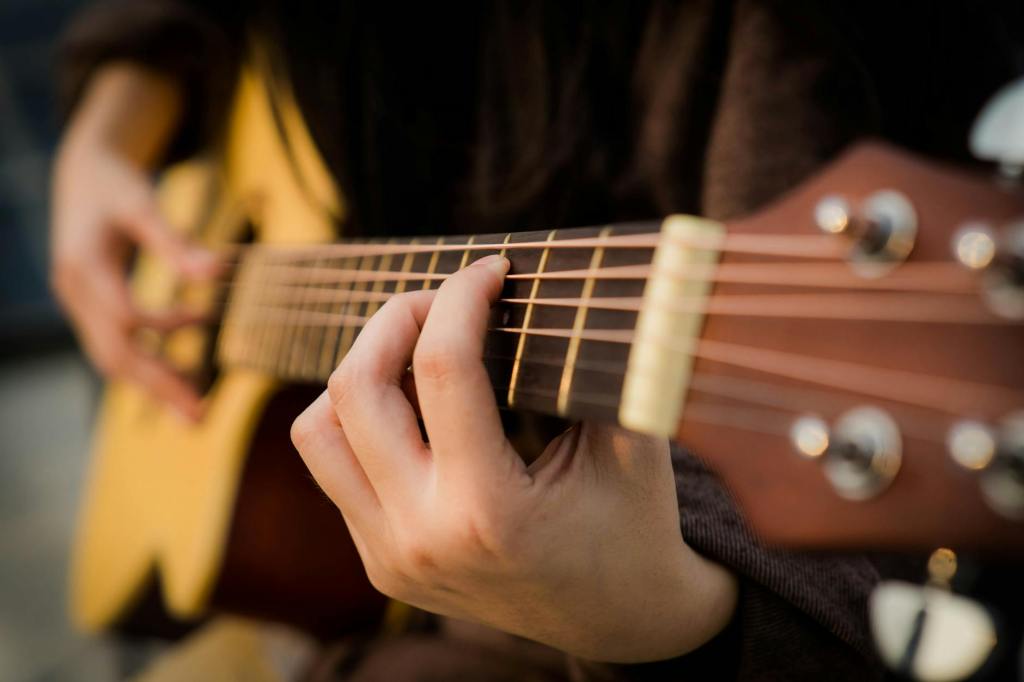
My husband and I had a delightful time at the movie theater watching A Complete Unknown. I’ve always enjoyed Bob Dylan’s music, though I’m not one of his fans who can identify every allusion he’s referencing or give a great theory about what each song means. (When I’m in the mood for that sort of analysis, I rewatch the same five videos from Bishop Robert Barron’s early YouTube days, starting with this one.)
For awhile, I thought that made me a “fake fan” of Dylan’s. Sure I sing along to his music in the car, know the chords to a few of his songs on the guitar, and have a few favorite phrases of his that I turn over in my mind, but I’m no great analyzer of his music.
Well I was happy to find out recently that neither is Dylan himself. A Complete Unknown ends with a “where are they now” text graphic explaining that, despite winning the Nobel Prize in Literature, Dylan declined to attend the award ceremony. My husband—for whom A Complete Unknown was his first experience of Bob Dylan, except for the twenty-minute sidequest I forced him on to drive past Dylan’s former house in Hibbing, Minnesota on our way to our honeymoon on the Canadian border—thought this was very funny.
I was surprised to catch up with the rest of the world and the Bob Dylan fandom and discover that, despite not attending the award ceremony, Dylan did still record a lecture for the Nobel Prize organization. (I’m not sure if he wanted to do this or if he was forced into it.)
Bob Dylan has never been straightforward about the “meaning” of his songs, so I wasn’t sure if he was about to interpret his work in a public way over the course of this lecture. And he did not do so. He fills the entire twenty-seven minute segment with his own summaries of Moby-Dick, All Quiet on the Western Front, and The Odyssey. He doesn’t even interpret these three texts except to say “there’s religious imagery” or “these themes have made their way into my writing.” (It’s a nice citation for Great Books programs.)
This, I found very satisfying.
It seemed to me that Bob Dylan is exactly the opposite of everything fame in 2025 is about. He seemingly has no interest in projecting his ego on his artwork, he just wants to let it lie. And he just lets these other three books lie.
And that’s one reason I enjoyed A Complete Unknown so thoroughly: it just let its subject matter lie. It wasn’t interested in psychologically dissecting Dylan or even the 1960s; it simply portrayed the time period and some people, and let you see it. And that’s a very generous thing to do.
My new year’s resolution has been to be less self-reflective. I usually fill a 300-page journal every year. The practice is one part therapeutic, one part antiquarian, one part prayerful, and two parts egotistical. How can I sum up who I am? How can I extrapolate from that to decide who I’m going to be? It sounds like a recipe for depression or anxiety, or both. (Self-reflection isn’t totally bad. 300 pages is a lot though.)
In a conversation with Sylvie (the fictional version of Suze Rotolo) about Now, Voyager, Dylan argues that Bette Davis’s character didn’t set out to “find herself, like her ‘self’ was a missing shoe or something.” We aren’t concrete entities abstracted from ourselves. We can’t behold and reflect on ourselves in that way. We can only say with the saints, nunc coepi, now I begin.
St. Ignatius had a practice of tapping himself on the knee when he had sinned—not as a way of punishing himself, but as a way of saying (in different words) “I’m done with that. That sin is in the past. It is not me.” Then he was free to examine his conscience and confess his sins, confident in the prospect of right relation with God.
Artists, journalers, and sinners can all learn from Bob Dylan’s forward momentum. The fact is, we are all complete unknowns to ourselves—”how does it feel?” you ask? Pretty freeing, pretty wonderful.
As we were leaving the theater, my husband said, “I really liked it. I still don’t know anything about Bob Dylan.”
 Jennifer Conner
Leave a comment